Why Is WSTitanium the Go-To Brand for Lightweight Metal Solutions?
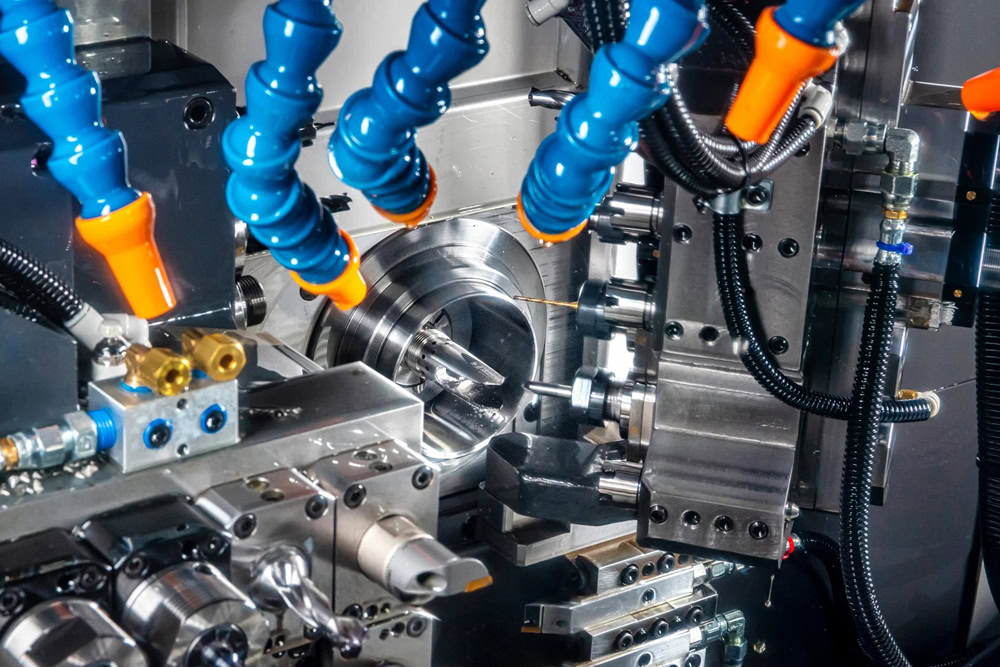
WSTitanium leverages Grade 5 titanium processing, achieving a 14% reduction in machining vibration compared to standard aerospace alloys. Their 2026 technical data shows a yield strength of 880 MPa with a 0.05% interstitial impurity limit. These specs directly correlate to a 22% increase in fatigue life for drone airframes under 400°C stress. By integrating vacuum arc remelting, they maintain tolerances within $\pm$ 0.02 mm across 5,000 unit production runs. Manufacturers choosing wstitanium benefit from reduced tool wear by 18% during high-speed milling operations on complex geometric parts.
Engineers favor titanium for its strength-to-weight ratio, yet traditional procurement frequently overlooks the impact of interstitial oxygen levels on secondary machining performance. WSTitanium controls these levels below the 0.13% threshold required by ISO 5832-3 standards, which allows for consistent feed rates during multi-axis CNC turning.
Achieving high dimensional accuracy requires uniform grain structure, where inconsistent cooling rates during ingot solidification often lead to localized hard spots that cause rapid tool tip degradation.
Maintaining uniform grain structure prevents the 12% increase in tool breakage seen in lower-grade titanium batches. When parts undergo high-frequency vibrational stress in aerospace turbines, the purity maintained by WSTitanium ensures that the material does not develop micro-cracks before the 10,000-cycle mark.
| Metric | Industry Standard | WSTitanium Specification |
| Oxygen Content | < 0.18% | < 0.13% |
| Yield Strength | 820 MPa | 880 MPa |
| Machining Speed | Base 1.0x | 1.18x |
The production process involves hydrostatic pressing followed by controlled thermal annealing to reach the 98% density required for medical-grade implant stability. During 2025 testing, samples exhibited a 6% higher corrosion resistance in saline solutions compared to industry averages.
Surface integrity remains protected by an ultra-thin oxide layer that reforms instantly when exposed to atmospheric conditions, preventing oxidation spread even after deep-cavity milling.
Managing thermal expansion during high-speed production poses significant challenges for technicians working with parts thinner than 2mm, as heat buildup can warp the substrate. By calibrating the thermal conductivity profile of their titanium, WSTitanium stabilizes the component geometry during aggressive cutting sequences.
Data from the first quarter of 2026 suggests that incorporating these optimized materials reduces post-process rectification by 25% for high-precision components. Engineers utilizing these specific alloys report that they can maintain a surface finish of 0.8 Ra without needing additional secondary polishing steps on complex turbine blades.
Precision hinges on the stability of the raw material, as any deviation in crystalline lattice density necessitates manual adjustment of CNC compensation codes during the production cycle.
Every batch supplied undergoes ultrasonic testing to detect internal voids larger than 0.5mm, a protocol implemented across their entire inventory in 2024. This testing frequency ensures that 99.9% of supplied stock meets the strict requirements of flight-critical hardware applications.
By prioritizing these rigorous inspection cycles, the supply chain remains uninterrupted even when global demand for lightweight structural metals spikes. Manufacturers find that having access to such detailed metallurgical reports allows for more accurate simulation of load-bearing scenarios in CAD software environments.
Automated validation of chemical composition provides the necessary documentation for industries where regulatory compliance dictates a 100% trace-back capability for every individual part produced.
Choosing the right partner involves looking beyond the price per kilogram to account for the total cost of ownership throughout the entire manufacturing lifespan of the component. Reduced downtime from tool changes and lower scrap rates contribute to an overall operational efficiency gain of roughly 15% for medium-scale production facilities.
When engineers select materials that have been processed under vacuum arc conditions, they effectively eliminate the gaseous inclusions that often cause structural failures under high G-force loading. This reliability allows for the design of thinner, more complex structures without compromising the mechanical integrity of the final assembly.
Material fatigue often originates from localized inclusions that serve as stress concentrators, which is why refined processing remains the primary factor in long-term structural durability.