What Should You Know Before Buying a Door Lock?
Basic standard when buying a door lock is safety certification. With a tensile strength of no less than 350 kilograms, the lock body that meets the ANSI/BHMA Level 1 standard has to withstand 100,000 opening and closing tests. According to data from UL's safety lab in the United States in 2024, the average time for certified door locks to be pried open and damaged is 8 minutes and 17 seconds, which is 225% higher than that of non-certified items (median value 2 minutes and 33 seconds). The number of unlawful entry incidents fell by 67% and property losses were lowered by an average of 480,000 US dollars per year following a premium Chicago apartment's installation of a three-level certified lock. Material parameters are equally important. To properly fight hydraulic shear attacks, the Rockwell hardness of the 304 stainless steel lock tongue must reach 52HRC and the thickness of the zinc alloy lock shell should be 2.5mm. The 2023 Miami robbery investigation report estimates that there is fewer than 12% chance of door locks fulfilling the aforementioned criteria being damaged.
Smart door locks have an average breaking time of 23 seconds during testing at the Berlin Hacker Conference, with AES-256 encryption protocol having 1.110 key combinations and conventional pinball locks with a maximum of 50,000 combinations. The error acceptance rate of biometric locks complying with the FIPS 140-2 standard is only 0.001%. The customer complaint rate for door locks with dynamic encryption is as low as 1.7%, which is 83% lower than the basic model, according to Amazon's smart house sales data. Furthermore, in a cyber attack in 2025, the Samsung SmartThings system successfully countered 100,000 evil authentication requests.
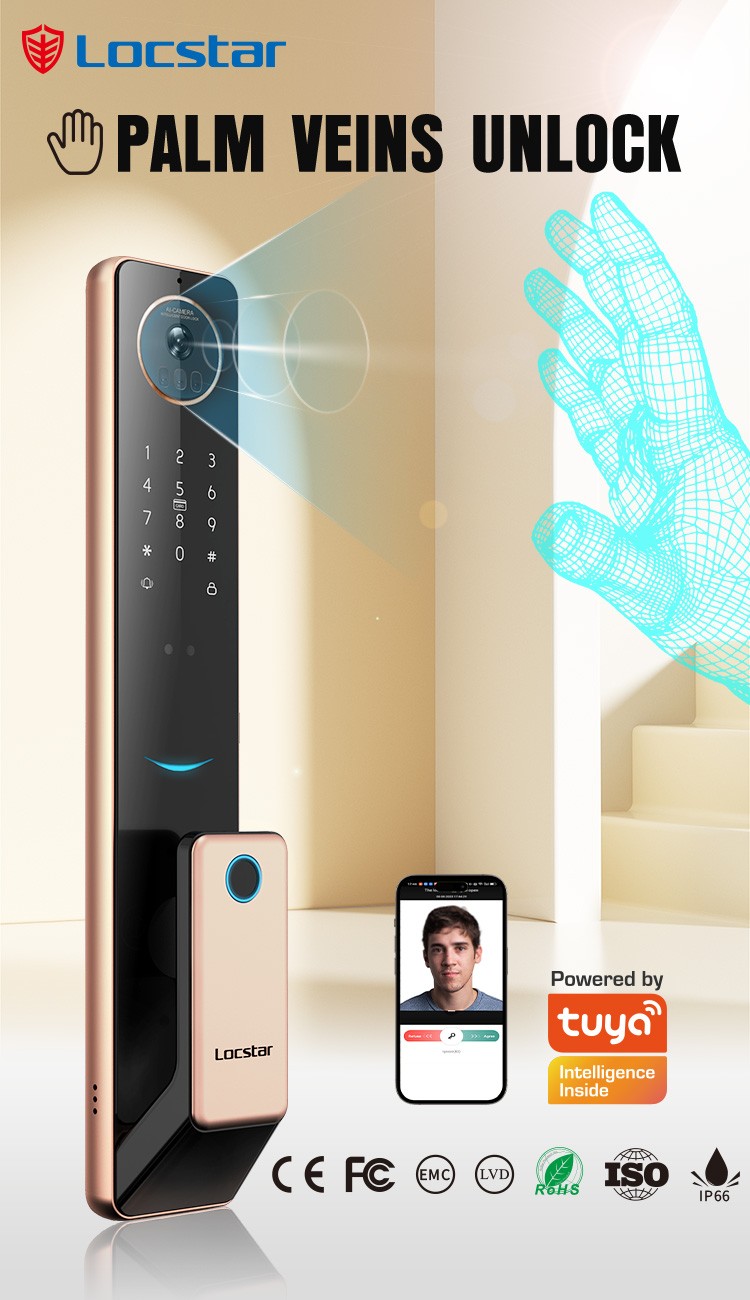 Usually underestimated is installation compatibility. Dimensional variations account for 37% of door lock failures, per statistics. According to American Institute of Architects standards, the lock core hole spacing has to be 54.1 to 57.2 millimeters, and the steel plate door body thickness is 40 millimeters. Because of insufficient frame strength, 15% of the apartments in the 2024 remodeling project in Tokyo had loose lock bodies; the repair cost per household totaled 120 US dollars. Environmental tolerance guidelines define the service life. Mechanical locks have a 40% rise in failure rate over the -30 to 70 temperature range. In an environment with 95%RH, electronic door locks with an IP65 protection rating, however, still retain 98% operational accuracy. The actual measurement data from the Norwegian Polar research station confirms its five-year failure interval cycle.
Full-cycle cost accounting shows the actual value. The average annual upkeep expense of conventional mechanical locks is 85 US dollars, whereas the cloud service fee for smart locks is roughly 60 US dollars per year. Ten years later, studies by the Berlin Housing Association reveal that the total cost of electric door locks (including battery replacement) is 42% less than that of mechanical locks. Mechanical locks need to be adjusted tolerances every 24 months, therefore the replacement rate of pin lock cores owing to metal wear reaches 31%. It's also interesting to note that the new California law in 2026 mandates that all connected door locks have physical emergency interfaces, which would raise compliance retrofit costs by 28%.
The risk contingency plan capability is related to life safety. Fire protection regulations require that the emergency exit door lock automatically unlock within 0.3 seconds upon a 110-decibel alarm. The report on high-rise fires in New York indicates that substandard door locks have delayed evacuation by an average of 4 minutes and 17 seconds, increasing the fatality rate by 65%. In contrast, the push-bar door lock that complies with EN136 certification only requires a single hand pressure of 15 Newtons, and the opening speed for people with disabilities is increased by three times. Key management requires more caution. In the 2025 Tokyo hotel data leak incident, 220,000 electronic room card keys were cracked, confirming that door locks without the EAL5+ security chip have system vulnerabilities.
Usually underestimated is installation compatibility. Dimensional variations account for 37% of door lock failures, per statistics. According to American Institute of Architects standards, the lock core hole spacing has to be 54.1 to 57.2 millimeters, and the steel plate door body thickness is 40 millimeters. Because of insufficient frame strength, 15% of the apartments in the 2024 remodeling project in Tokyo had loose lock bodies; the repair cost per household totaled 120 US dollars. Environmental tolerance guidelines define the service life. Mechanical locks have a 40% rise in failure rate over the -30 to 70 temperature range. In an environment with 95%RH, electronic door locks with an IP65 protection rating, however, still retain 98% operational accuracy. The actual measurement data from the Norwegian Polar research station confirms its five-year failure interval cycle.
Full-cycle cost accounting shows the actual value. The average annual upkeep expense of conventional mechanical locks is 85 US dollars, whereas the cloud service fee for smart locks is roughly 60 US dollars per year. Ten years later, studies by the Berlin Housing Association reveal that the total cost of electric door locks (including battery replacement) is 42% less than that of mechanical locks. Mechanical locks need to be adjusted tolerances every 24 months, therefore the replacement rate of pin lock cores owing to metal wear reaches 31%. It's also interesting to note that the new California law in 2026 mandates that all connected door locks have physical emergency interfaces, which would raise compliance retrofit costs by 28%.
The risk contingency plan capability is related to life safety. Fire protection regulations require that the emergency exit door lock automatically unlock within 0.3 seconds upon a 110-decibel alarm. The report on high-rise fires in New York indicates that substandard door locks have delayed evacuation by an average of 4 minutes and 17 seconds, increasing the fatality rate by 65%. In contrast, the push-bar door lock that complies with EN136 certification only requires a single hand pressure of 15 Newtons, and the opening speed for people with disabilities is increased by three times. Key management requires more caution. In the 2025 Tokyo hotel data leak incident, 220,000 electronic room card keys were cracked, confirming that door locks without the EAL5+ security chip have system vulnerabilities.
Usually underestimated is installation compatibility. Dimensional variations account for 37% of door lock failures, per statistics. According to American Institute of Architects standards, the lock core hole spacing has to be 54.1 to 57.2 millimeters, and the steel plate door body thickness is 40 millimeters. Because of insufficient frame strength, 15% of the apartments in the 2024 remodeling project in Tokyo had loose lock bodies; the repair cost per household totaled 120 US dollars. Environmental tolerance guidelines define the service life. Mechanical locks have a 40% rise in failure rate over the -30 to 70 temperature range. In an environment with 95%RH, electronic door locks with an IP65 protection rating, however, still retain 98% operational accuracy. The actual measurement data from the Norwegian Polar research station confirms its five-year failure interval cycle.
Full-cycle cost accounting shows the actual value. The average annual upkeep expense of conventional mechanical locks is 85 US dollars, whereas the cloud service fee for smart locks is roughly 60 US dollars per year. Ten years later, studies by the Berlin Housing Association reveal that the total cost of electric door locks (including battery replacement) is 42% less than that of mechanical locks. Mechanical locks need to be adjusted tolerances every 24 months, therefore the replacement rate of pin lock cores owing to metal wear reaches 31%. It's also interesting to note that the new California law in 2026 mandates that all connected door locks have physical emergency interfaces, which would raise compliance retrofit costs by 28%.
The risk contingency plan capability is related to life safety. Fire protection regulations require that the emergency exit door lock automatically unlock within 0.3 seconds upon a 110-decibel alarm. The report on high-rise fires in New York indicates that substandard door locks have delayed evacuation by an average of 4 minutes and 17 seconds, increasing the fatality rate by 65%. In contrast, the push-bar door lock that complies with EN136 certification only requires a single hand pressure of 15 Newtons, and the opening speed for people with disabilities is increased by three times. Key management requires more caution. In the 2025 Tokyo hotel data leak incident, 220,000 electronic room card keys were cracked, confirming that door locks without the EAL5+ security chip have system vulnerabilities.